
 ثبت نام / ورود
1885–1999
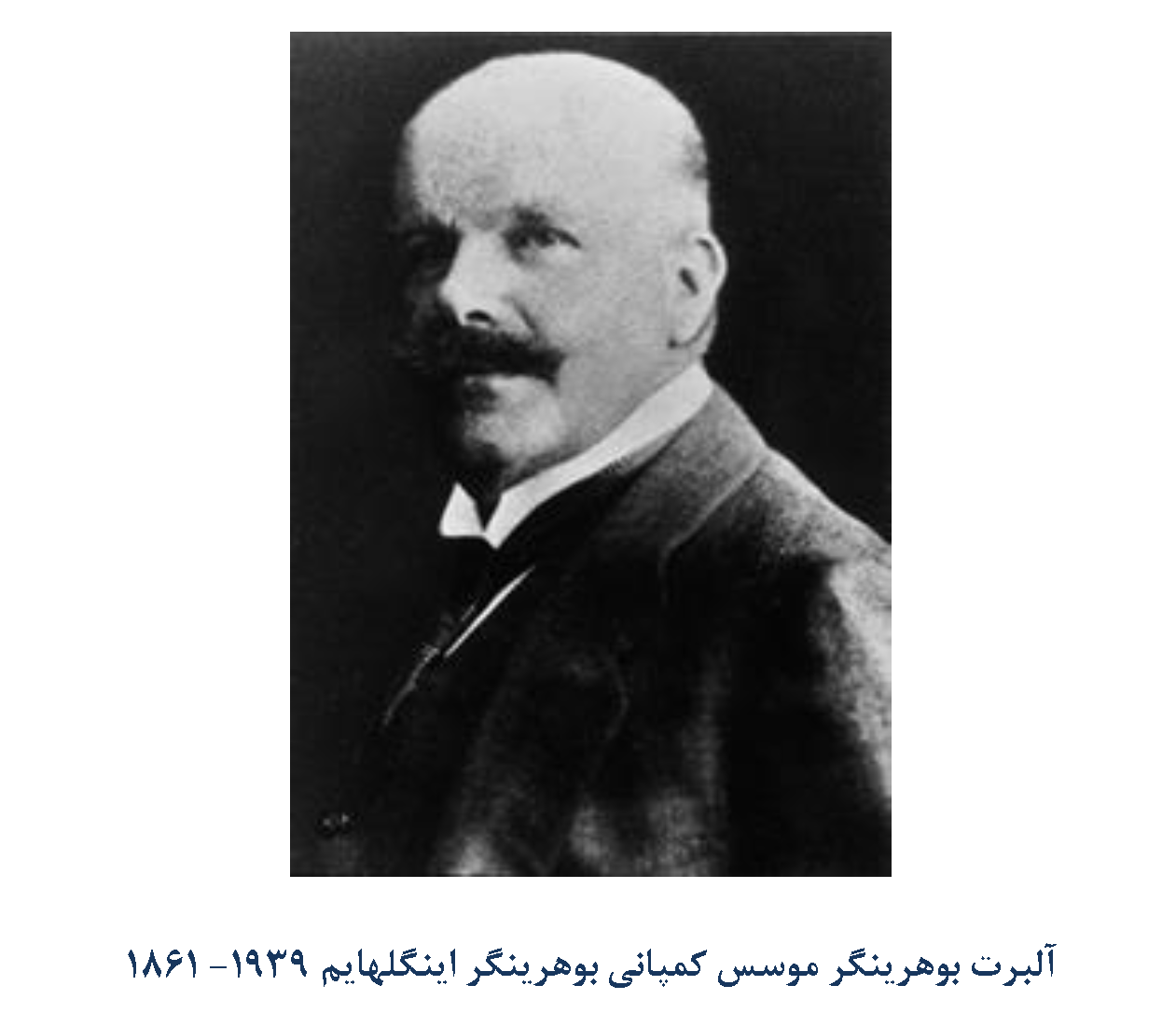
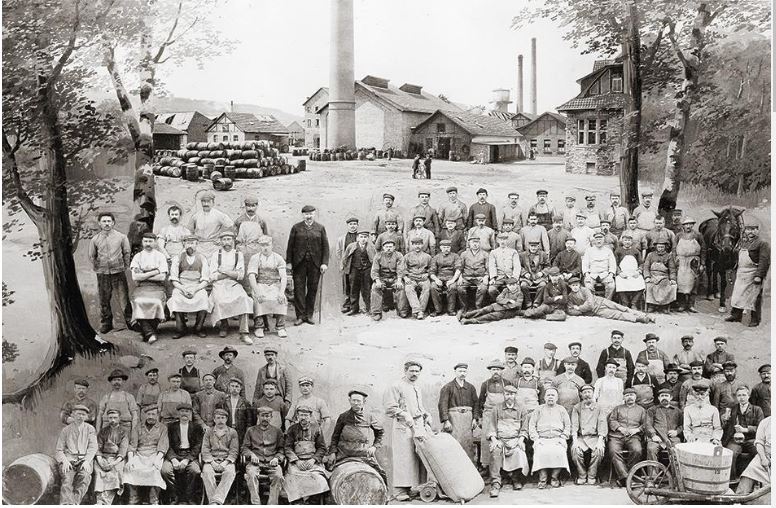
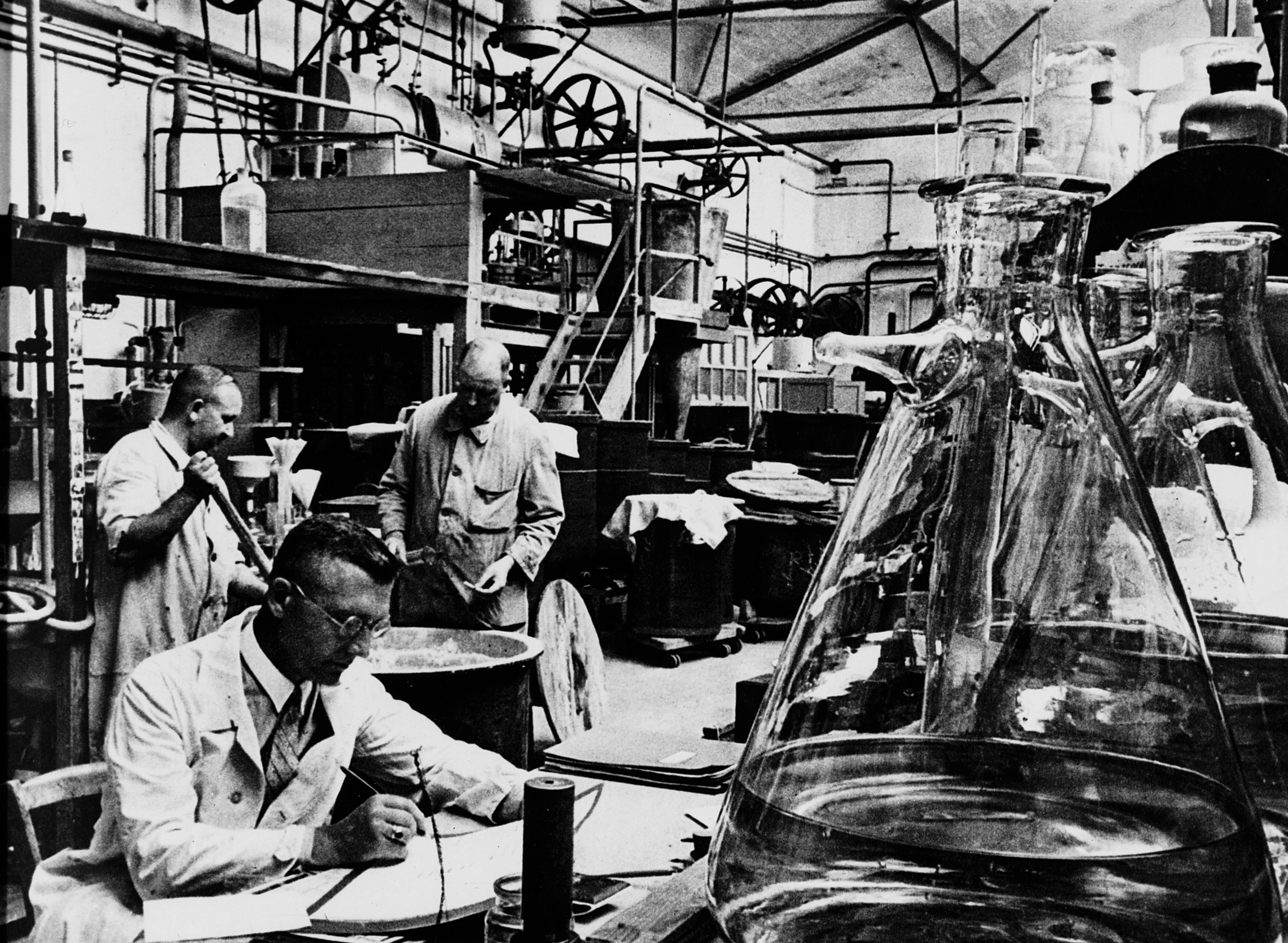
1885: Albert Boehringer buys a small tartar factory in Ingelheim am Rhein; work begins on 1 August.
1886: The factory commences production of tartaric acid for use in the food industry (e.g. in baking powder and carbonated beverages).
1893: Albert Boehringer renames the company C. H. Boehringer Sohn (CHBS) after his father, Christoph Heinrich Boehringer.
1893: While experimenting with the production of citric acid, lactic acid is formed. Albert Boehringer develops this process, with the intention of producing lactic acid on a larger scale.
1895: Lactic acid is produced on an industrial scale, and is successful commercially.
1917: Professor Heinrich Otto Wieland, chemist, future Nobel Prize winner and cousin of Albert Boehringer, sets up the company’s research department.
1928: Albert Boehringer purchases Dr. Karl Thomae, a company based in Winnenden near Stuttgart
1946: Dr. Karl Thomae GmbH is re-opened in Biberach an der Riss with a staff of 70 people.
1954: The company hires former Nazi Fritz Fischer after he is released from jail. Fischer was convicted of war crimes and crimes against humanity at the Nuremberg Trials. This has never been corroborated or authenticated. The company supplied the most potent ingredient of Agent Orange.
1955: The Animal Health division is established as the company acquires Pfizer’s veterinary programme.
1966: A subsidiary company named Boehringer Ingelheim Hellas was founded and the company started business in Greece. A new factory was built close to Athens at Koropi
1971: The foreign subsidiary, Boehringer Ingelheim Pharmaceuticals, Inc is founded in Ridgefield, Connecticut (USA). This site was soon expanded, and became the company’s North American research center.
1985: The Research Institute of Molecular Pathology (IMP) is established in Vienna through a collaboration with Genentech; it opened in 1988.
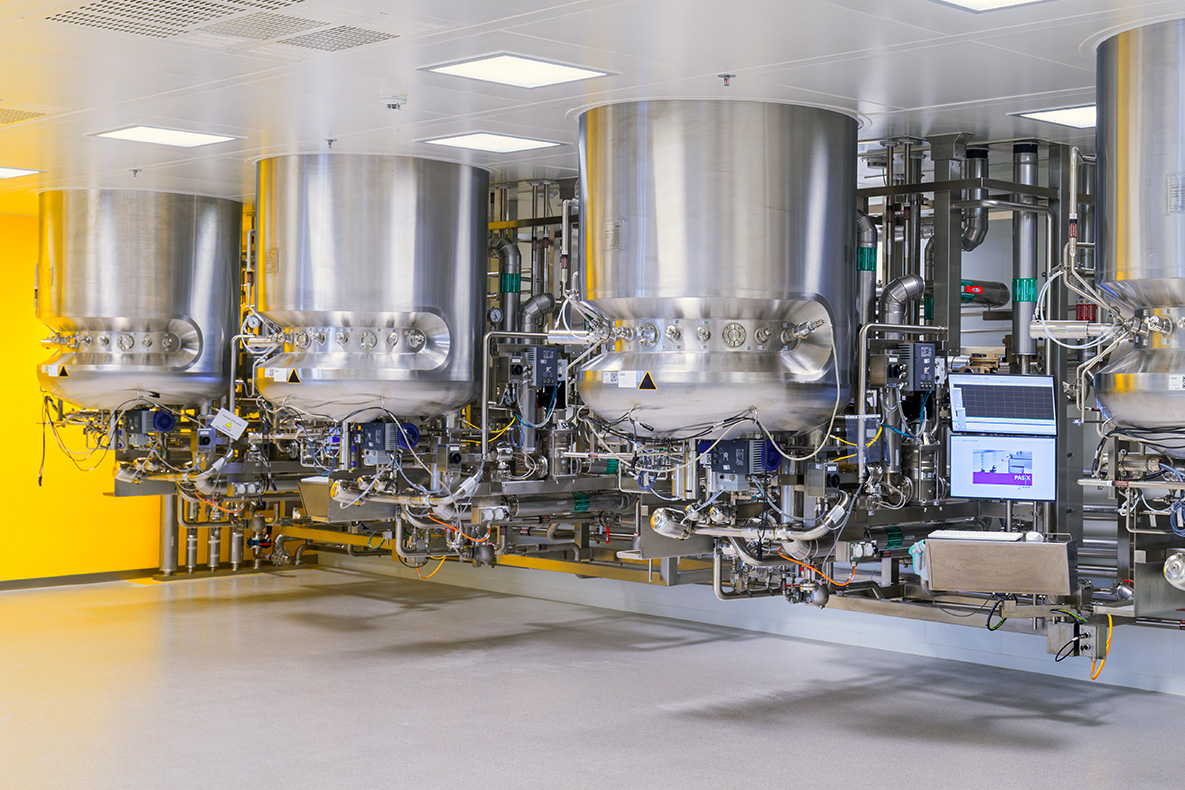
1986: The biotechnological center in Biberach begins production of biopharmaceuticals from cell cultures.
1998: The merging of Boehringer Ingelheim KG and Dr. Karl Thomae GmbH founded Boehringer Ingelheim Pharma KG.
2000–2016
In 2004, the company acquired STEAG micro Parts GmbH in December of the same year the company announced the acquisition of the outstanding shares of Boehringer Ingelheim Shionogi Vetmedica.
In June 2008, the company announced its intention to acquire Actimis Pharmaceuticals for $515 million, depending on the performance of Actimis’ leading asthma compound AP768
In 2009, through its US subsidiary, Boehringer Ingelheim Vetmedica Inc., acquired a significant portion of the Fort Dodge Animal Health business from Pfizer.
In 2010, BI, through its Boehringer Ingelheim Japan Investment GK subsidiary, acquired all outstanding shares of SSP CO., Ltd, with Nippon Boehringer Ingelheim Co., Ltd already holding 60.2% of SSP CO’s shares
In August 2012, the company acquired FX125L and the somatotaxin programme from Funxional Therapeutics for an undisclosed sum.
In May 2015, the company acquired the investigational drug PXS4728A from Pharmaxis’ In July, the company sold its Roxane business to Hikma Pharmaceuticals Plc for $2.65 billion ($1.18 billion in cash and issued 40 million new Hikma shares). The company also agreed to make cash payments of up to $125 million based on performance milestones. On the same day the company announced it would partner with Hanmi Pharmaceutical to develop and commercialize HM61713, a third generation treatment for EGFR mutation-positive lung cancer. Boehringer also terminated its collaboration with Vitae Pharmaceuticals on a new BACE program for Alzheimer’s
The company sold the rights to Faldaprevir, a HCV protease inhibitor to Trek Therapeutics
In July 2016, the company sold the commercialisation rights to BI 655066 (Risankizumab), to AbbVie for $595 million upfront as well as undisclosed milestone payments and royalties. BI 655066 is a drug in late-stage testing for psoriasis, and in earlier testing for Crohn’s disease, psoriatic arthritis and asthma
In September of the same year the company announced it would acquire ViraTherapeutics for €210 million ($230 million]), a developer of oncolytic virus therapies, dependent on the success of Phase I trials.
2016 – Sanofi asset swap
See also: Sanofi and Merial
In June 2016, the company announced it had struck an asset-swap deal with Sanofi, Boehringer would sell its consumer health division (valuing it at €6.7 billion) and €4.7 billion in cash, whilst acquiring the Merial animal health division (valuing it at €11.4 billion / $12.4 billion). The deal could mean that Boehringer is now one of the animal healthcare global leaders. In September of the same year, Amgen announced it would purchase the rights to Boehringer Ingelheim’s Phase I bispecific T-cell engager compound (BI 836909, now AMG 420) for use in the treatment of multiple myeloma As part of the asset swap, Boehringer and Merial sold a number of assets to Ceva Santé Animale – namely some animal health vaccines and pharmaceuticals from the Merial portfolio for swine, bovine and companion animals, as well as some intellectual property, manufacturing processes and R&D activities. In October 2016 the company sold its US pet vaccines business and a manufacturing plant for $885 million, to Eli Lilly Cos Elanco Animal Health division.
2018–onwards
In April 2018, the company announced that it would launch an immuno-oncology partnership with OSE Immunotherapeutic worth up-to-$1.4 billion, focussing on developing OSE’s late-preclinical-stage candidate OSE-172, a checkpoint inhibitor antibody designed to treat solid tumors. In the same month Boehringer announced a partnership with Topas Therapeutics and their virus-based vectors. In mid-September the company exercised its option to acquire viral cancer therapy developer, ViraTherapeutics, for €210 million ($245 million)
In March 2019, Boehringer announced it would acquire ICD Therapeutics in July, subsidiary company Boehringer Ingelheim Pharmaceuticals, Inc. announced it had acquired Amal Therapeutics SA, boostings the business’ focus on cancer immunotherapy and vaccine treatments.
In May 2020, the business announced it would acquire Northern Biologics Inc. which focuses on therapeutic antibodies targeting tumors. In June, the business announced it would sell off part of its stake in London-listed Hikma Pharmaceuticals (28 million out of a 40 million share holding) for around $800 million In July, the company announced it would acquire Global Stem cell Technology, boosting its animal health business In December, Boehringer announced it would acquire Labor Dr. Merk & Kollegen, boosting its immuno-oncology therapy range including Vesicular Stomatitis Virus and cancer vaccines platforms and Swiss-based NBE Therapeutics, adding drug candidates including a treatment being used in early trials against triple-negative breast cancer and lung cancer, for $1.5 billion.
In June 2020, Boehringer and G1 Therapeutics announced a co-promotion agreement for trilaciclib (Cosela), a CDK4/6 inhibitor designed to prevent chemotherapy-induced myelosuppression. The agreement targets small cell lung cancer, will initially run for three years, and covers the United States and Puerto Rico.
In September 2021, the company announced it would acquire Abexxa Biologics, boosting its cancer immunotherapy research.
Business overview
Boehringer Ingelheim works in human pharmaceuticals, animal health, and biopharmaceuticals. The group consists of 145 affiliated companies with around 50,000 employees in 2017 in all continents. Research and development facilities were in five sites and 20 production plants in 13 countries. The research and development facilities are located in Biberach (Germany), Ridgefield (Connecticut), Vienna, Kobe, and Milan (closed in 2017). Over 8,000 employees work for Boehringer Ingelheim in research and development.
Operational sites
Boehringer Ingelheim is a globally operating company, with 146 subsidiaries around the globe. The company’s largest site and corporate headquarters is in Ingelheim am Rhein near Mainz and Frankfurt, Germany. Their main business regions are Europe, North America and Asia. The Research Institute of Molecular Pathology in Vienna (Austria), founded in 1985, has had Boehringer Ingelheim as its main sponsor since 1993.
- 0
- 0
